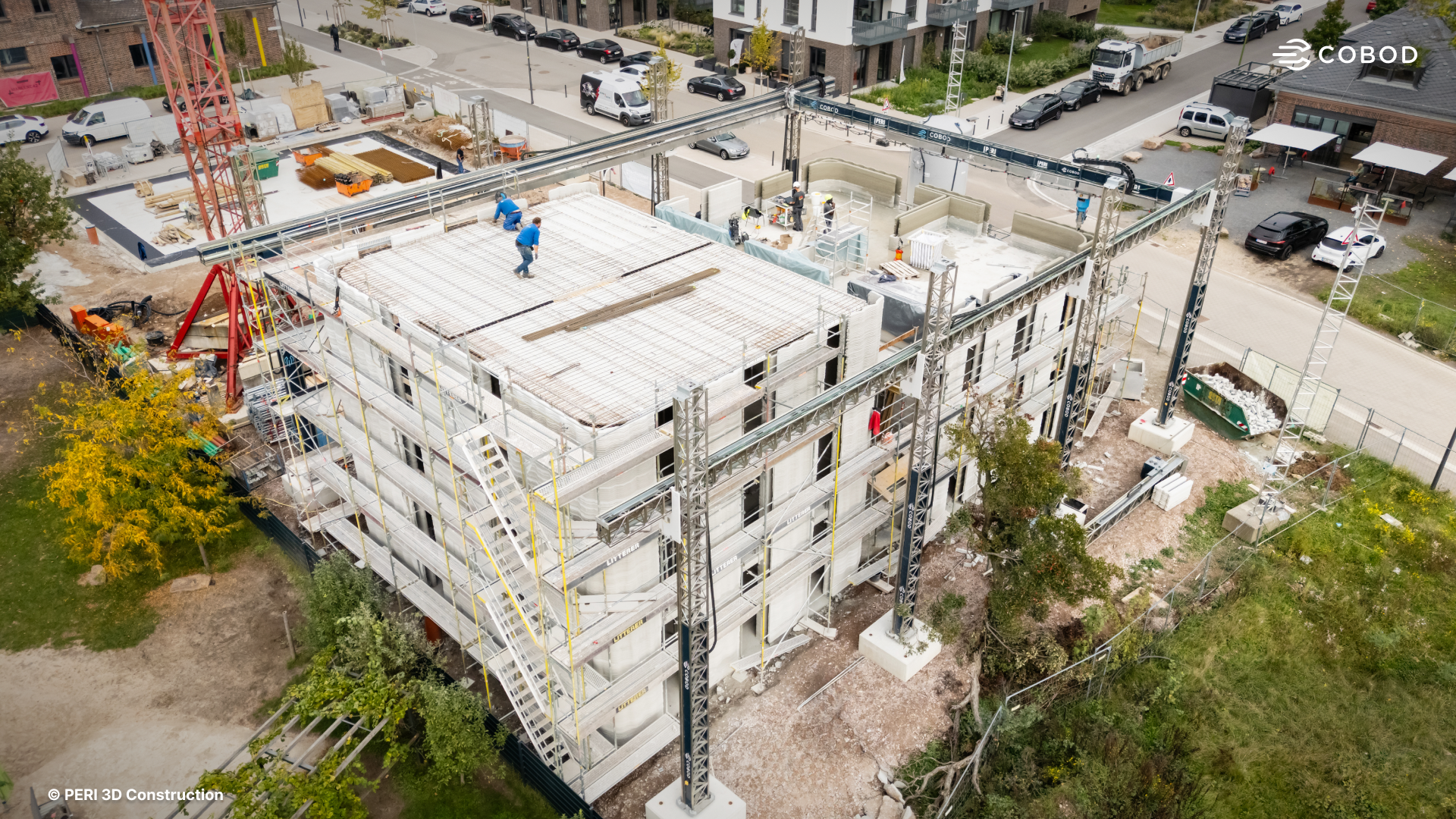
Germany’s first reference project for serial 3D printed housing construction has been printed in Heidelberg by PERI 3D Construction using COBOD’s 3D construction printing technology. The “DREIHAUS” (“Three-house”) project demonstrates how 3D construction printing can deliver housing 30% faster and 10% more cost-effectively than conventional methods, while maintaining structural quality and reducing environmental impact.
- First reference project for serial 3D printed housing in Germany completed using COBOD technology
- 30% faster and around 10% more cost-effective than conventional construction according to PERI 3D Construction
- Walls printed in record time: one square metre in five minutes, largest building in only 26 working days
- Use of world’s first carbon-captured net-zero cement, evoZero®, reduces CO₂ emissions
- Project demonstrates scalable, standardized 3D printed housing model for the German market.
- See the video of the printing here
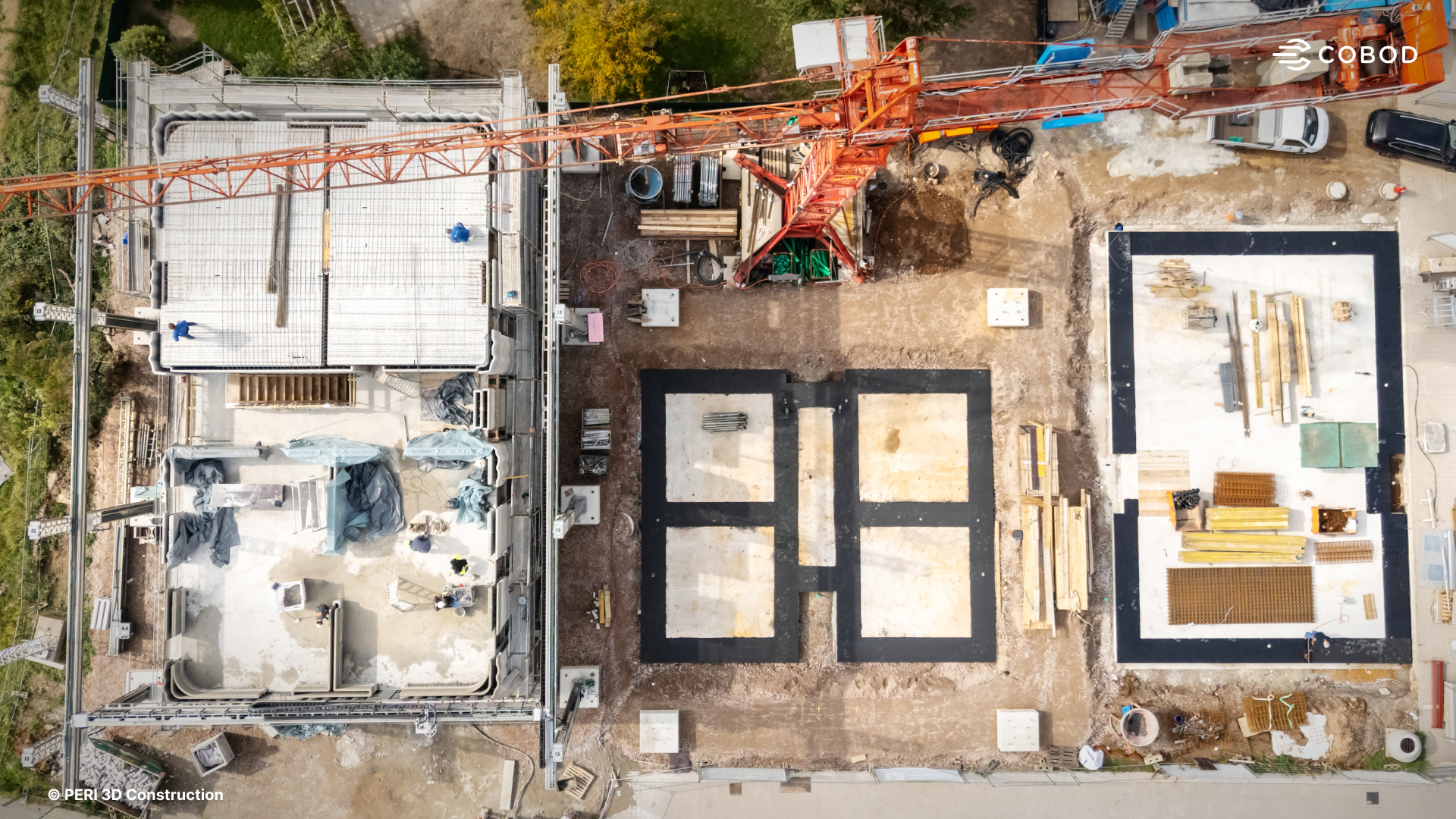
The DREIHAUS project delivers a total of 21 residential units, with living areas ranging from 46 m² (495 sq.ft.) to 89 m² (958 sq.ft.), constructed on-site in Heidelberg. The three building variants, S, M, and L, offer total living spaces of 348.54 m² (3,752 sq.ft.), 425.10 m² (4,576 sq.ft.), and 525.80 m² (5,660 sq.ft.), respectively.
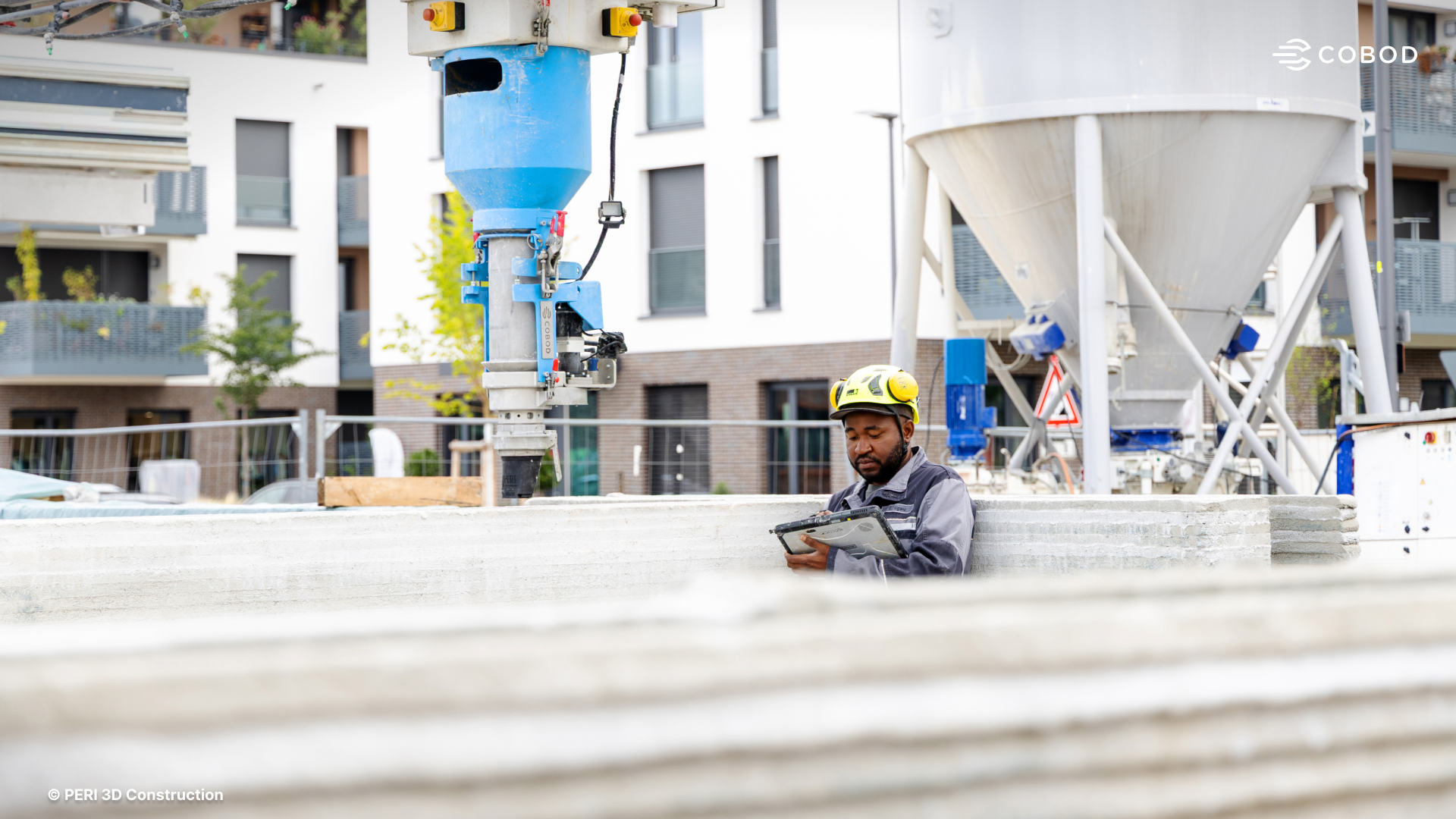
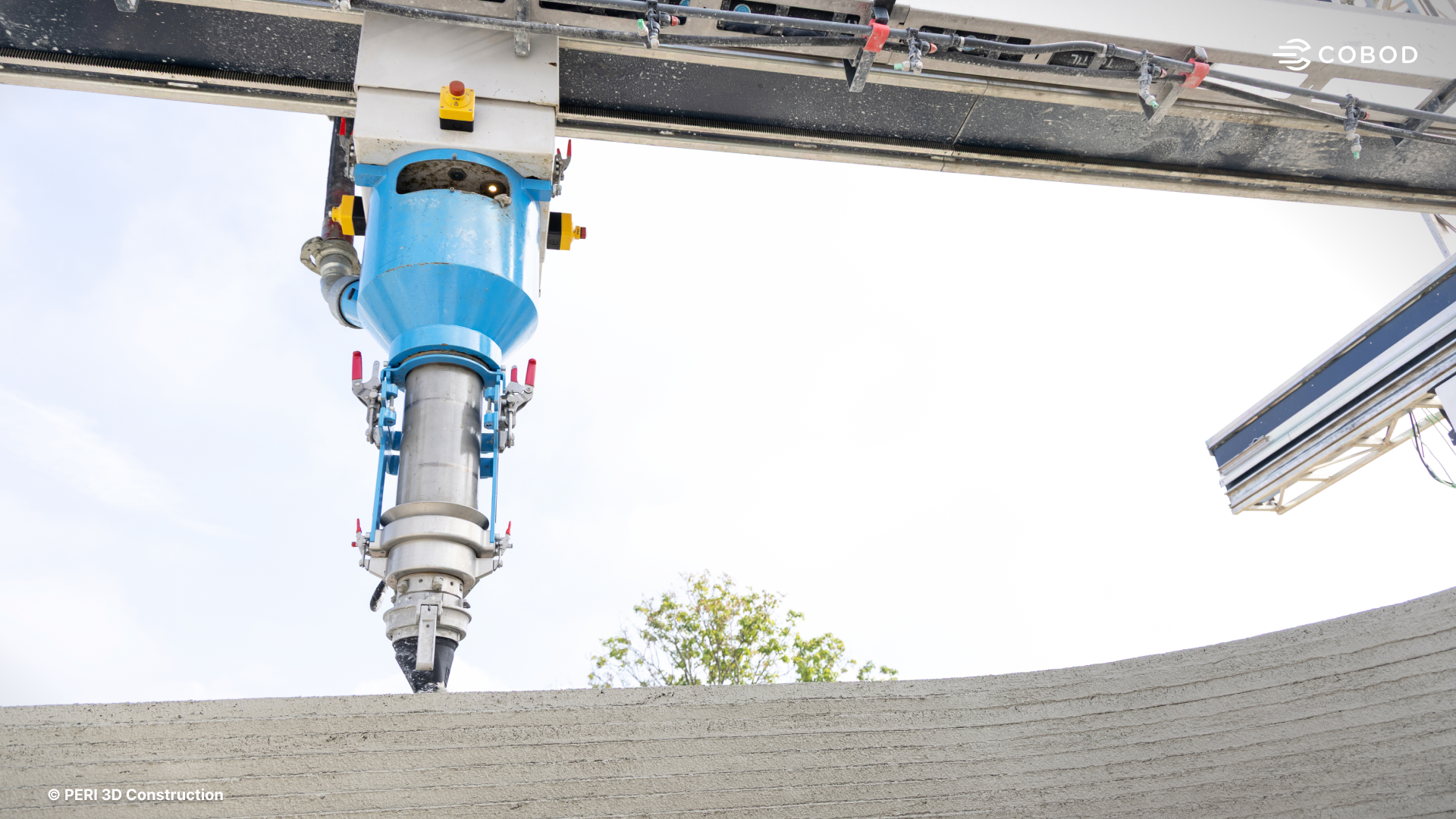
With COBOD’s technology, the walls of the apartment buildings are printed in record time by a team of only 2-3 people. The 3D printer follows digitally pre-programmed paths with millimetre precision, completing one square metre of wall in about five minutes. The printing of the largest apartment building was completed in 26 working days, demonstrating how automation and precision drastically shorten construction timelines.
The DREIHAUS concept is fully optimized for 3D construction printing. Each building is divided into two segments to enable parallel workflows, while one half is being printed, the concrete slab in the other is already being poured. This coordinated process shortens construction time by 30% compared to conventional methods. Designed for replication, the DREIHAUS model can be implemented by construction companies seeking to adopt 3D concrete printing, creating a new path toward efficient, serial construction directly on the building site.
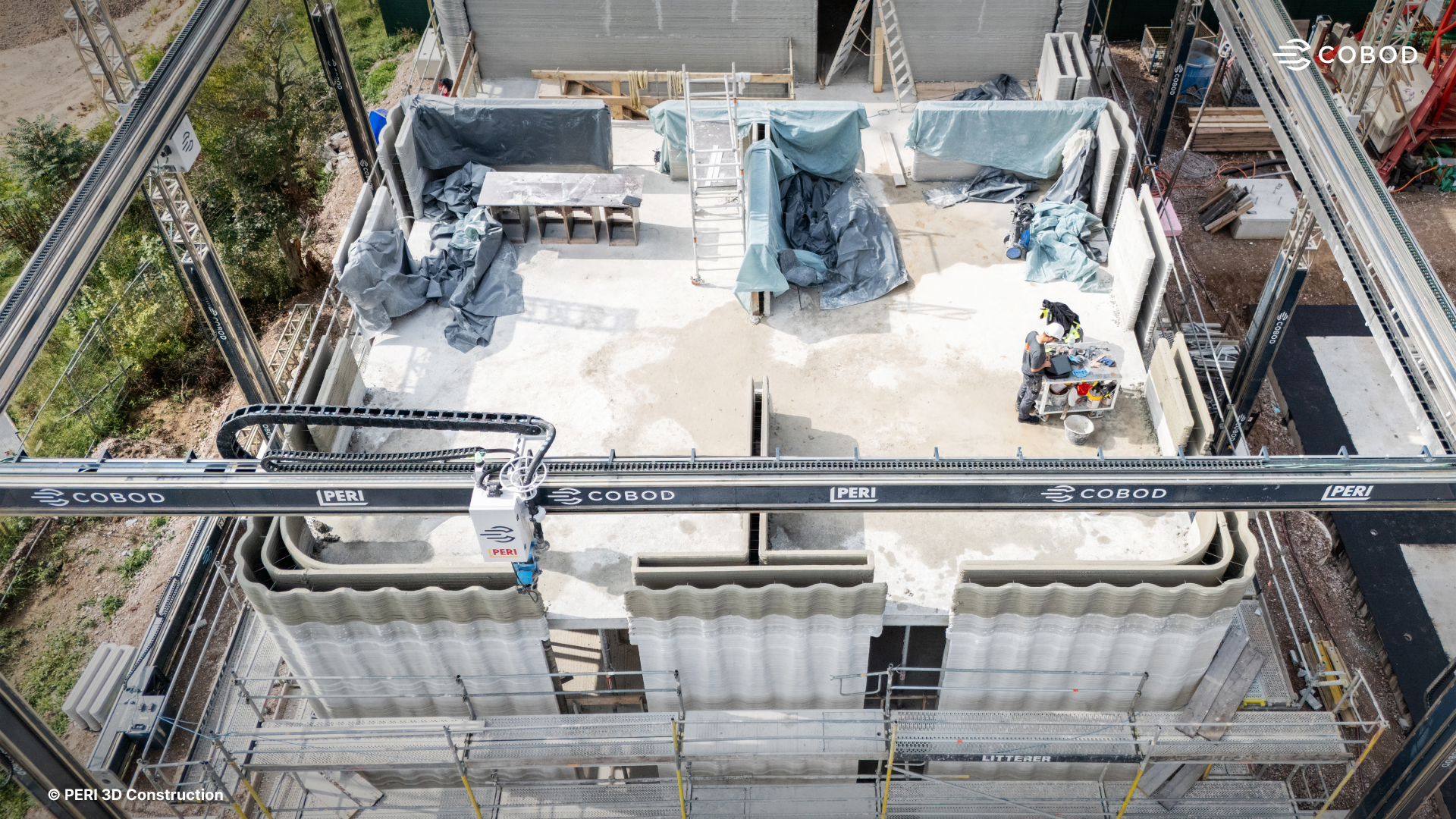
In addition to speed and cost savings, the project sets new benchmarks for sustainability. For the first time in Germany, Heidelberg Materials’ evoZero®, the world’s first carbon-captured net-zero cement, will be used for one of the 3D printed buildings. Combined with COBOD’s precision printing technology, the result is a substantial reduction in concrete use and CO₂ emissions without compromising structural performance, according to PERI 3D Construction.
The DREIHAUS project was developed in collaboration between PERI 3D Construction, Korte-Hoffmann Gebäudedruck, Heidelberg Materials, and SSV Architekten. /p>
“Efficiency is the defining advantage of 3D construction printing,” said Henrik Lund-Nielsen, Founder & General Manager of COBOD International. “By combining speed, precision, and automation, builders can finalise projects in shorter timelines, while reducing both cost and waste. DREIHAUS proves that standardised, digital automated construction can meet housing demand quickly and sustainably.”
Dr Fabian Meyer-Brötz, Managing Director of PERI 3D Construction, underscored the project’s significance: “The 3D printer automatically follows the pre-planned paths and prints one square metre of wall in about five minutes. This is how the walls of the largest apartment building were constructed in just 26 working days. DREIHAUS combines everything we have learned in our 17 3D printing projects to date. It demonstrates both well-thought-out floor plans optimised for 3D printing and the efficient integration of printing into the entire construction process.”
Christian Schwörer, CEO of the PERI Group, added: “With the DREIHAUS project, we are demonstrating how residential buildings can be constructed faster, more efficiently, and to a high standard of quality. For PERI, DREIHAUS is not just another project step, but a symbolic milestone: it shows that serial 3D housing construction in the German market is not just a vision for the future, but can be implemented immediately.”
RELEVANT LINKS
- COBOD BOD2 3D Construction Printer: https://cobod.com/solution/bod2/
- Video about the project: Watch it now
- Heidelberg Materials, www.heidelbergmaterials.de and www.evozero.de
- Korte-Hoffmann Gebäudedruck, www.korte-hoffmann.de
- PERI 3D Construction, www.peri3dconstruction.com
- SSV Architekten, www.ssv-architekten.de
ABOUT COBOD
COBOD International stands as the global leader in supplying 3D printers for the construction sector, with over 85 printers distributed across North and Latin America, Europe, the Middle East, Africa, and Asia-Pacific. Driven by a vision to build smarter through multifunctional construction robots based on 3D printing, COBOD envisions automating half of the construction processes to achieve faster, cost-effective, sustainable results with enhanced design versatility.
From residential, commercial, and public buildings, COBOD’s 3D printers have been instrumental in erecting 1- to 3-story structures across all six inhabited continents. The innovative technology also extends to fabricate large-scale data centers, wind turbine towers, tanks, and more.
Embracing an open-source material approach, COBOD collaborates with global partners, including customers, academia, and suppliers. The company, backed by prominent shareholders such as General Electric, CEMEX, Holcim, and PERI, operates from its main office in Copenhagen, Denmark, and regional locations in Miami, Florida, and Kuala Lumpur, Malaysia. COBOD’s dynamic team comprises over 100 professionals from 25 diverse nationalities.
ABOUT PERI 3D CONSTRUCTION
PERI 3D Construction GmbH is one of the leading providers of 3D printing solutions for the construction industry. We are part of the PERI Group, a globally operating manufacturer of formwork and scaffolding systems in over 70 countries with more than 9,000 employees.
Our goal is to revolutionize the construction industry and the way buildings are constructed today. By combining 3D printing technology with the PERI Group’s decades of experience and strong expertise in construction, we increase productivity on the job site. We incorporate this know-how not only into our technology but also directly into practice – for example, we realized Germany’s first residential house as well as Europe’s largest 3D-printed building. Altogether, we have already successfully printed and implemented more than 17 projects in Europe and the USA together with or for our customers.
Interested in 3D construction printing?
Whether you have a project in mind or just want to learn more, we’re happy to talk.